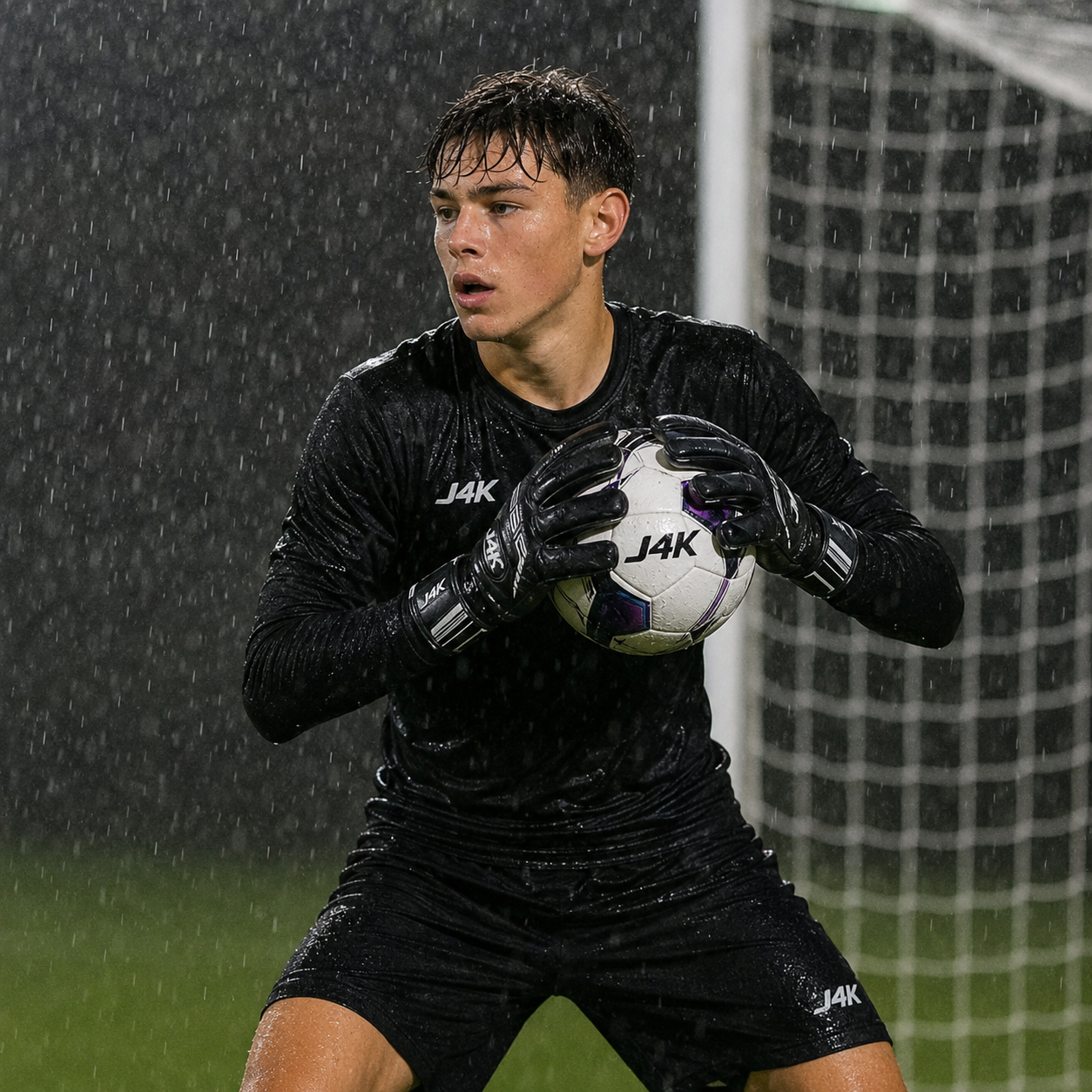
If you are searching for the best goalkeeper gloves for wet weather, one of the first things I want you to understand is that choosing the correct glove is not just about the brand name.
At J4K Goalkeeper Gloves, we have worked with goalkeepers for many years, from young grassroots goalkeepers through to professional players, and one of the biggest mistakes I see is goalkeepers choosing a glove without understanding the palm.
The truth is simple:
When it comes to wet weather, the goalkeeper glove palm is one of the most important things you should look at.
In this article, I am going to explain the two glove palms I believe you should seriously consider when looking for the best goalkeeper gloves for wet weather.
They are:
- Contact Foam
- Giga Grip
I have also created a video called “Best Goalkeeper Gloves for Wet Weather” covering this exact subject.
So if you prefer watching rather than reading, you can watch the video and then use this article as a reference.
WATCH VIDEO – Best Goalkeeper Gloves For Wet Weather
Do Not Just Copy Your Favourite Professional Goalkeeper
This is one of the biggest mistakes goalkeepers and parents make.
They see their favourite professional goalkeeper wearing a particular pair of gloves and think:
“If they are good enough for a professional goalkeeper, they must be good enough for me.”
Unfortunately, it does not always work like that.
Professional goalkeepers can sometimes have goalkeeper gloves made specifically for them.
Their gloves may look exactly like the retail version, but they may have different:
- Palm latex
- Thickness
- Glove cut
- Internal materials
- Wrist specifications
There is also another massive difference.
Professional Goalkeepers Play on Better Pitches
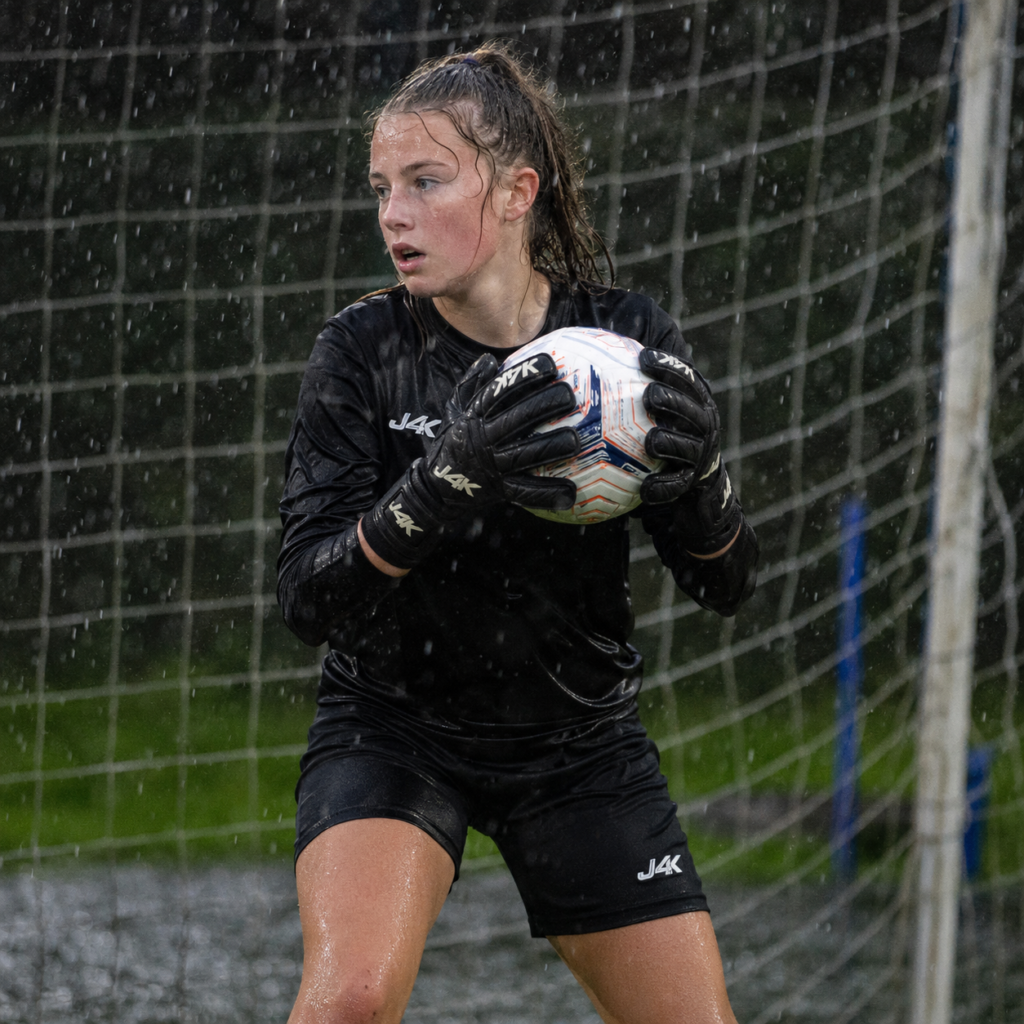
Think about the surfaces most professional goalkeepers play on.
The pitches are usually:
- Professionally maintained
- Soft
- Regularly watered
- Free from large amounts of sand and grit
- Much better than the average grassroots pitch
Now compare that with the average grassroots goalkeeper.
You might be playing on:
- Council football pitches
- Muddy goalmouths
- Dry grass
- Sandy surfaces
- Artificial 3G pitches
- Hard ground
These completely different conditions can have a major effect on how a goalkeeper glove performs.
So copying the glove worn by your favourite professional goalkeeper does not necessarily mean you are buying the best goalkeeper gloves for wet weather for your own playing conditions.
What Should You Look For Instead?
I would start with the goalkeeper glove palm.
When people search Google for the best wet-weather goalkeeper gloves, they normally search for a particular glove model.
I think the better question is:
What goalkeeper glove palm works best in wet weather?
For me, there are two main palms to consider.
1. Contact Foam Goalkeeper Gloves
Contact Foam is extremely popular with professional goalkeepers.
You can normally recognise it because many Contact Foam goalkeeper gloves come with a protective plastic film covering the palm.
When you peel the plastic away, the latex underneath can feel incredibly sticky.
That is exactly why the protective film is there.
If the palms were stored directly against each other, they could potentially stick together.
Why Is Contact Foam So Popular?
Contact Foam can provide excellent grip.
In the right conditions, it can feel extremely tacky and secure when catching the football.
This is why many goalkeepers love it.
If you play regularly on excellent grass pitches, Contact Foam can certainly be one of the best options to consider.
However, there is an important downside.
The Problem With Contact Foam on Poorer Surfaces
The same sticky palm that helps grip the football can also grip everything else.
If you dive on a dry or sandy pitch, the palm can attract:
- Sand
- Dirt
- Dust
- Soil
- Grass debris
- Rubber crumb from artificial pitches
Once all of this starts sticking to the palm, cleaning the glove can become difficult.
This is why I would not automatically recommend Contact Foam to every grassroots goalkeeper.
If you play on top-quality football pitches every week, Contact Foam can be fantastic.
If you regularly play on rougher surfaces, I would look closely at Giga Grip.
2. Giga Grip Goalkeeper Gloves
For many grassroots goalkeepers, Giga Grip would probably be my preferred option for wet conditions.
Unlike Contact Foam, Giga Grip does not normally have that incredibly sticky feeling straight out of the packet.
However, once moisture gets into a quality Giga Grip palm, the grip can become excellent.
That is why I think Giga Grip is particularly useful when searching for the best goalkeeper gloves for wet weather.
It can offer a very good balance between grip and practicality.
Why I Like Giga Grip for Grassroots Goalkeepers
For a grassroots goalkeeper, Giga Grip can make sense because you may be playing on different surfaces every week.
One week could be:
- A wet grass pitch
The next could be:
- A dry council pitch
Then the next match might be:
- A 3G artificial surface
Giga Grip can be a very practical option for these changing conditions.
It also does not have quite the same problem of sand and debris instantly sticking to an extremely tacky palm.
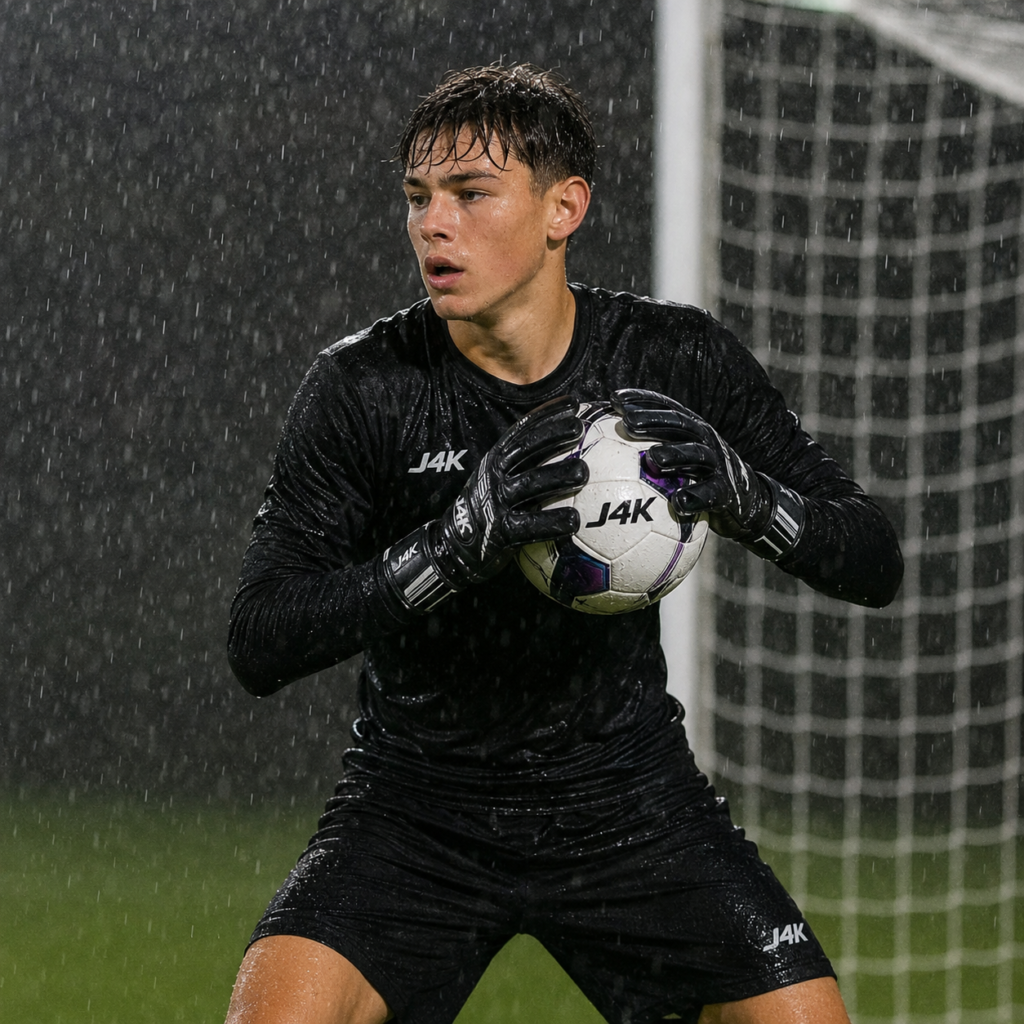
Contact Foam or Giga Grip?
If you are trying to decide between the two, think carefully about where you play.
Consider Contact Foam if:
- You play on excellent grass pitches
- You mainly play on professional-quality surfaces
- You want maximum initial tackiness
- Your playing surfaces are generally clean
Consider Giga Grip if:
- You play grassroots football
- You play on a mixture of surfaces
- You regularly play in wet conditions
- You play on poorer grass pitches
- You want a good balance between grip and practicality
There is no single goalkeeper glove that will be perfect for every goalkeeper.
That is the whole point.
The best glove for you depends on:
- Your playing surface
- The weather
- Your age
- Your level
- How often you play
- How you look after your gloves
Do Not Automatically Trust Every Online Glove Review
There are thousands of goalkeeper glove reviews on YouTube, TikTok, Instagram and websites.
Some are excellent.
However, always ask yourself why somebody is recommending a particular glove.
Sometimes the person reviewing the glove may be:
- Sponsored by the brand
- Receiving commission
- Using an affiliate link
- Trying to sell a specific product
That does not automatically mean their advice is wrong.
But it does mean you should understand the glove technology yourself.
This is why I recommend learning about goalkeeper glove palms first.
Then you can visit whichever goalkeeper glove brand you prefer and look for the correct type of palm.
What About J4K Goalkeeper Gloves?
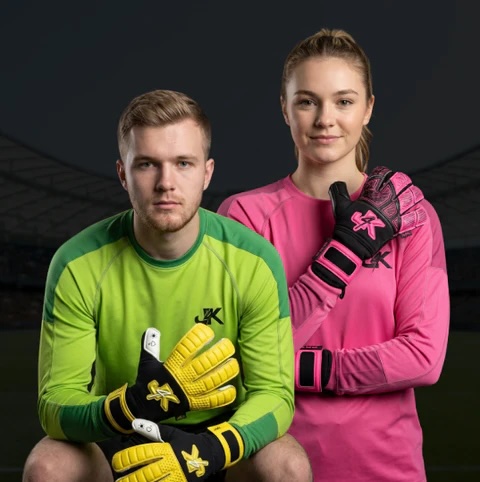
Obviously, I would love you to consider J4K Goalkeeper Gloves.
However, I also understand that goalkeeper gloves are very personal.
When I played professionally, there were certain goalkeeper gloves I loved and others I simply did not like.
Every goalkeeper has different preferences.
So I would rather teach you what to look for than simply tell you that one J4K glove is automatically perfect for everyone.
If you decide to look at J4K, fantastic.
If you prefer another goalkeeper glove brand, simply look at the palm specifications and see whether they offer Contact Foam or Giga Grip.
The Best Goalkeeper Gloves for Wet Weather Start With the Palm
If there is one thing I want you to remember from this article, it is this:
Do not just search for the best goalkeeper glove. Search for the best goalkeeper glove palm for your playing conditions.
For wet-weather football, my two main recommendations are:
Contact Foam
Best suited to goalkeepers playing on high-quality and cleaner surfaces.
Giga Grip
A very strong option for grassroots goalkeepers playing on a mixture of grass, artificial and less predictable surfaces.
That is the smarter way to choose the best goalkeeper gloves for wet weather.
Final Advice
Before purchasing your next pair of goalkeeper gloves, do not just look at:
- The price
- The colour
- The professional goalkeeper wearing them
- The brand
- The marketing
Look at the palm.
If you understand the palm, you will have a much better chance of choosing a glove that works for the surfaces and weather conditions you actually play in.
And when it comes to wet-weather goalkeeping, I would start by researching Contact Foam and Giga Grip.
That will put you in a much better position to choose the right goalkeeper gloves for you.
Get More FREE Goalkeeper Help, Advice and Guidance
If you would like more FREE goalkeeper help, advice and guidance, join the J4K Total Goalkeeping Online Community completely FREE.
Inside the community, goalkeepers and parents can:
- Get FREE help and advice from ex-professional goalkeepers
- Ask questions about goalkeeper training, gloves, mindset and development
- Learn from other goalkeepers and parents around the world
- Access FREE goalkeeper resources
- Get guidance to help you or your goalkeeper child improve
- Have the chance to WIN J4K Goalkeeper Gloves every single week
Join the J4K Total Goalkeeping Online Community today — completely FREE.